trends
BIID sets out what Design Council's £136.7bn design economy report means for interior designers
The interior design institute has briefed members on the Design Council's Design Economy 2026 report, which puts UK design GVA at £136.7bn and groups interior designers with furniture and fashion in an £8.8bn category.

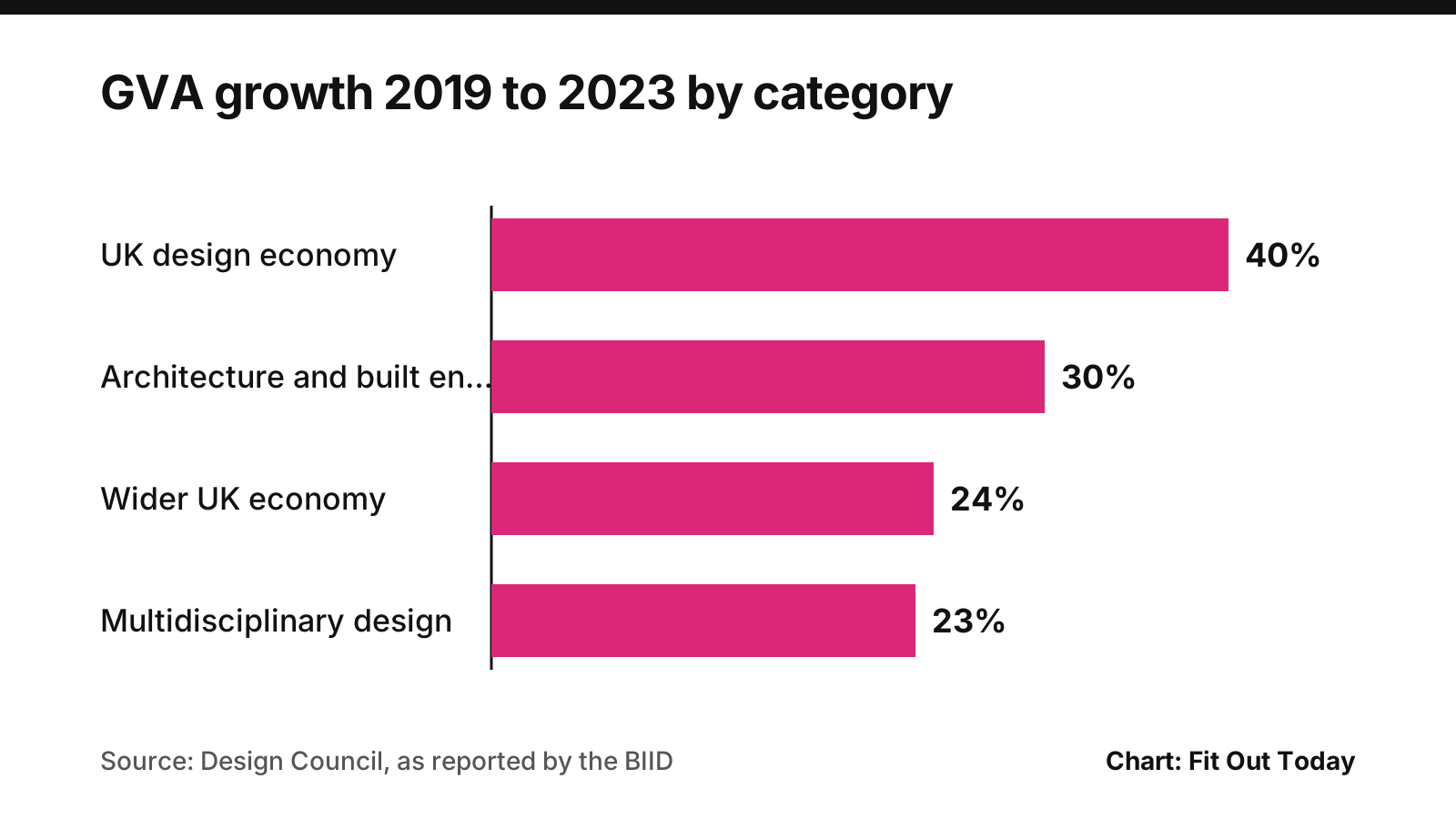
The British Institute of Interior Design (BIID) has briefed its members on the Design Council's Design Economy 2026 report, which puts the UK design economy at £136.7bn in gross value added (GVA) in 2023, a 40% rise since 2019.
The BIID said the wider UK economy grew by 24% over the same period, and that design now accounts for 5.5% of total UK GVA, a contribution it said exceeds that of the entire UK retail sector.
The institute published its briefing on 11 November. The Design Council's press page lists a release dated 7 September 2026 titled Design overtakes retail sector as biggest contributor to the UK economy.
Where interior designers sit
According to the BIID, interior designers are counted within the report's multidisciplinary design category, alongside furniture and fashion designers, rather than with architecture and the built environment.
That category generated £8.8bn in GVA in 2023, up 23% since 2019, the BIID said. Employment in multidisciplinary design grew by 11% between 2020 and 2025 to more than 165,000 people.
The institute said the figures are not specific to interior design, but that they show continued demand for multidisciplinary design expertise.
The report puts architecture and the built environment at £18.4bn in GVA in 2023, a 30% increase since 2019, according to the BIID.
| Category | GVA growth 2019 to 2023 |
|---|---|
| UK design economy | 40% |
| Architecture and built environment | 30% |
| Wider UK economy | 24% |
| Multidisciplinary design | 23% |
The BIID said the findings reinforce the case for recognising interior design as an integral part of the wider built environment, contributing to the quality, functionality and long-term value of spaces.
Employment and skills
More than 2.27 million people worked in the design economy in 2025, a 15% rise since 2020, against UK employment growth of less than 2.5%, the BIID said.
On qualifications, the institute reported that 68% of designers held a degree or equivalent in 2025, up from 62% in 2020. It said the report also records a 68% fall in students taking Design and Technology GCSEs over the decade to 2024, which it said raises concerns about the future talent pipeline.
Women make up 25% of the overall design workforce, the BIID said, but 63% of designers in the multidisciplinary category that includes interiors.
The institute said the report strengthens the case for continued investment in design education, professional skills and recognition of the value that qualified designers bring to businesses, communities and the built environment.
Design beyond design firms
The BIID said two-thirds of the economic value generated by design comes from designers working in other industries. The Design Council's Good Growth Design Hubs page puts the same measure at 66% of design economy GVA produced beyond traditional design industries, while its Design Economy page states that 80% of designers work in wider industries, contributing £90.6bn of GVA.
The Design Council also says 10% of all UK exports come from design and that £20 can be generated for every £1 invested in design.
Background
The Design Council describes Design Economy as the only research of its kind, offering data-driven insight into design's role in growth. Earlier editions include the 2022 People, Places and Economic Value report and the 2024 Environmental and Social Value of Design report.
The 2026 report maps design economy GVA by region for 2023 and the percentage change between 2019 and 2023. The Design Council has named a group of ambassadors for the report who will act as spokespeople and advocates in the months ahead.
The BIID describes itself as the only professional institute for interior designers in the UK. It was founded in 1965 as the Interior Decorators and Designers Association.
Sources
- British Institute of Interior Design (BIID) (opens in a new tab) (accessed 2026-11-11)
- Design Council (opens in a new tab) (accessed 2026-11-11)
- Design Council (opens in a new tab) (accessed 2026-11-11)
- Design Council (opens in a new tab) (accessed 2026-11-11)
- British Institute of Interior Design (BIID) (opens in a new tab) (accessed 2026-11-11)
This story was researched from the primary sources above and checked against them before publication. Spotted an error? Tell us and we will correct it promptly.